24 Hours Emergency Service - Call Us (732) 554-7357
Why Is My Kitchen Sink Clogged?
June 29, 2026
A clogged kitchen sink is one of the most frustrating plumbing problems homeowners face. One minute, you’re washing dishes, and the next, you’re staring at standing water that refuses to drain. When this happens, many people assume the garbage disposal is the problem, but that’s not always the case.
The challenge is figuring out whether the blockage is inside the drain line or if the garbage disposal itself is malfunctioning. Understanding the difference can help you identify the issue faster and determine whether a simple fix is possible or if professional assistance is needed.
How to Tell if the Garbage Disposal Is the Problem
Your garbage disposal is designed to grind small food particles so they can flow safely through the plumbing system. When the disposal stops working properly, the symptoms are often different from a traditional drain clog.
Common signs of a garbage disposal issue include:
- Humming Noise: The disposal hums, but the grinding mechanism doesn’t turn.
- No Power: The unit won’t turn on at all.
- Frequent Resets: The disposal repeatedly trips the reset button.
- Poor Grinding Performance: Food waste remains in the sink instead of being processed.
- Persistent Odors: Strong smells continue even after cleaning the disposal.
Signs You Have a Clogged Kitchen Drain
Kitchen drain clogs often develop gradually as grease, food debris, soap residue, and other materials accumulate inside the pipe. Unlike disposal problems, drain clogs usually affect water flow even when the disposal appears to be functioning correctly.
Signs of a clogged kitchen drain include:
- Slow Drainage: Water takes longer than normal to leave the sink.
- Standing Water: Water remains in the basin after use.
- Gurgling Sounds: Air becomes trapped as water attempts to pass through a blockage.
- Recurring Backups: The sink repeatedly clogs after temporary fixes.
- Multiple Fixture Issues: Nearby plumbing fixtures may show drainage problems as well.
If you’re frequently dealing with slow drainage, it may be time to consider drain cleaning to remove buildup throughout the pipe rather than addressing the symptom alone.
Common Causes of Kitchen Sink Clogs
Many kitchen drain problems are caused by materials that should never go down the sink, even if a garbage disposal is installed. Some of the most common causes include:
- Grease and Cooking Oil: These substances harden as they cool and stick to pipe walls.
- Coffee Grounds: Grounds accumulate and form dense blockages over time.
- Eggshells: Small shell fragments can collect inside the plumbing system.
- Pasta and Rice: Starchy foods expand when exposed to water.
- Fibrous Vegetables: Celery, corn husks, and similar foods can wrap around disposal components.
- Food Scraps: Excessive food waste can overwhelm both disposals and drains.
Being mindful of what goes down the drain can help prevent future clogs.
Why DIY Drain Cleaners Can Make Things Worse
When faced with a clogged kitchen sink, many homeowners reach for chemical drain cleaners. While these products may seem like a quick solution, they often fail to remove the entire blockage and can damage older plumbing over time.
Chemical cleaners may:
- Damage Pipes: Corrosive ingredients can weaken plumbing materials.
- Create Safety Risks: Chemical residue can splash during future repairs.
- Fail to Remove Grease Buildup: Many products only create a temporary opening.
- Cause Environmental Concerns: Harsh chemicals eventually enter wastewater systems.
Mechanical cleaning methods and professional plumbing solutions are often safer and more effective for stubborn kitchen drain clogs.
When Professional Drain Cleaning Is the Best Solution
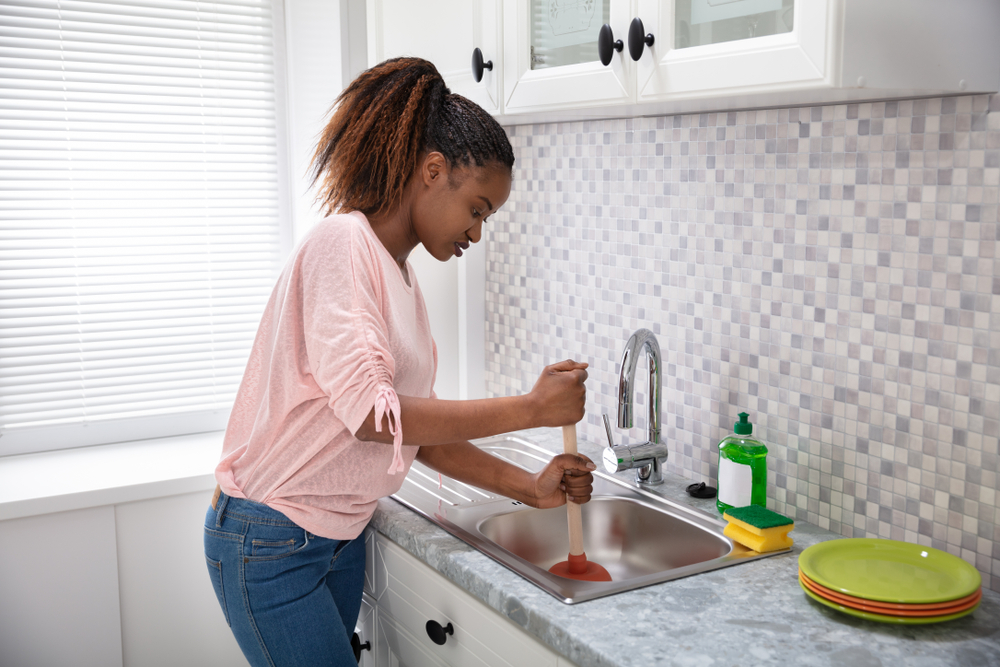
If your kitchen sink continues to clog despite plunging, cleaning the disposal, or trying basic maintenance, the blockage may be located deeper within the plumbing system. Professional drain cleaning can remove years of accumulated grease, food residue, soap buildup, and other debris that household methods often miss.
For severe blockages, hydro jetting may be used to thoroughly clean the inside of the pipe and restore full flow capacity. Reliable service can also identify whether the issue originates from the sink drain, garbage disposal, or a larger sewer line concern affecting the home’s plumbing system.
How to Prevent Future Kitchen Sink Clogs
Preventive maintenance is often the easiest way to avoid costly plumbing problems. A few simple habits can help keep your kitchen plumbing flowing smoothly:
- Avoid Pouring Grease Down the Drain: Dispose of grease in a container instead.
- Use Cold Water With the Disposal: Cold water helps move food particles through the system.
- Limit Food Waste: Scrape plates into the trash before rinsing.
- Clean the Disposal Regularly: Ice cubes and citrus peels can help reduce buildup and odors.
- Use a Sink Strainer: Catch debris before it enters the drain.
- Schedule Routine Maintenance: Professional inspections can identify developing issues early.
Contact Us for Kitchen Sink Drain & Garbage Disposal Help
If your kitchen sink isn’t draining properly, and you’re not sure whether the problem is the drain or the garbage disposal, All Clear Drain Cleaning can help. With our advanced drain cleaning and hydro jetting solutions, we can restore proper flow and keep your plumbing system running smoothly. Contact us now to schedule a service and get your kitchen sink working properly again.
« Return to Blog